
Cheese
In September 2016 I retired from cheesemaking, and the last of my 2016 wheels of cheese left the aging room in March of 2017. It was a bittersweet decision for me; I loved making cheese, but it was time to free myself for other pursuits and pleasures.
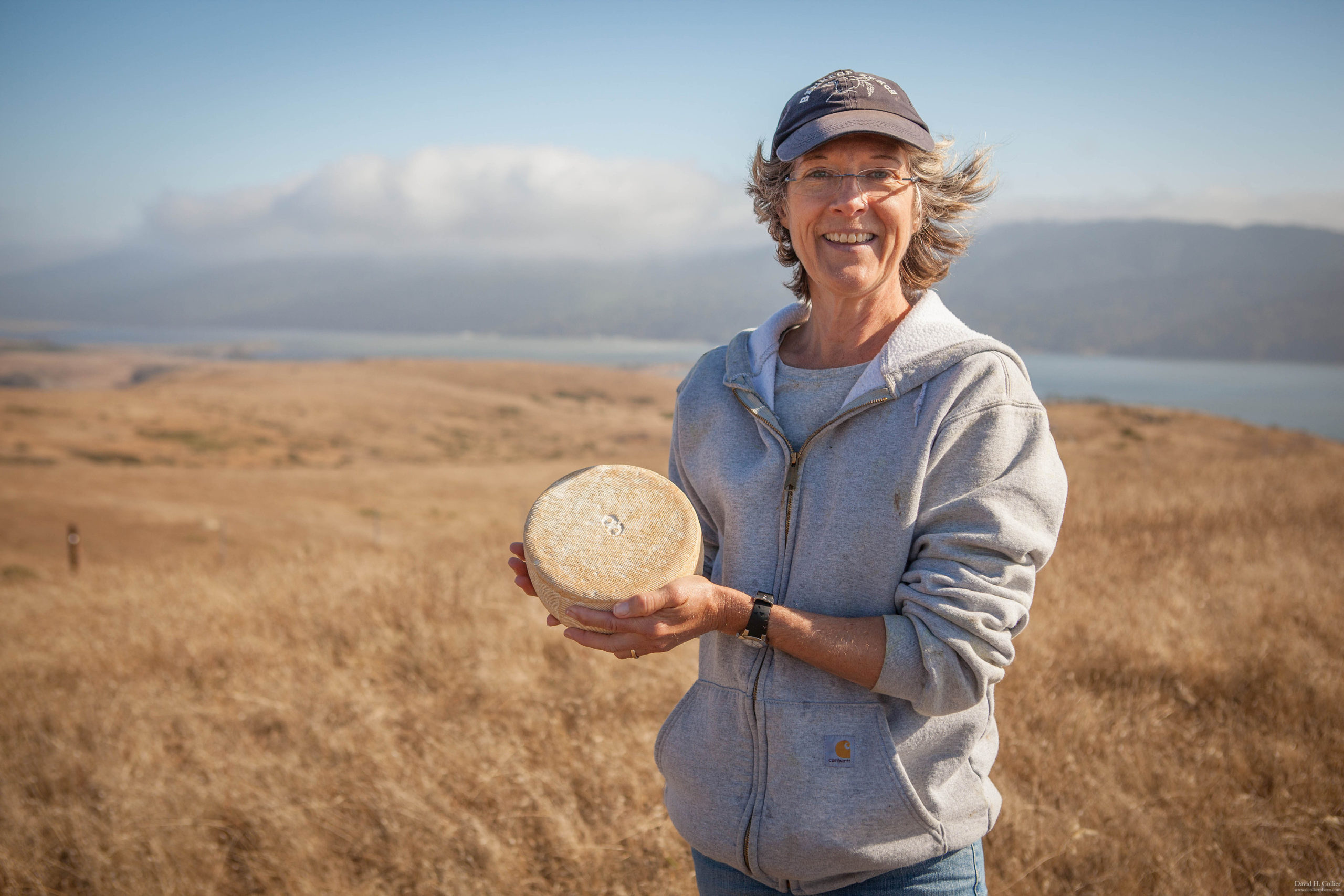
The larger of our two cheeses was called Baserri, which means farmhouse in Basque. This cheese was a 4- to 5-pound tomme. The green Basque countryside in France and Spain is dotted with ancient tile-roofed baserris where Basque farmers still make their living in traditional ways, often milking their sheep by hand and making small batches of cheese that they sell locally. Our Baserri was made in that spirit, in small batches, by hand. It was a West Marin interpretation of the Basque cheeses you can buy from farmhouses in the Basque country. Baserri was aged for 6 months before being released for sale. Baserri won First Place in its category in the 2016 American Cheese Society competition, Best in Division in the 2015 California State Cheese Competition, and won a Double Gold medal at the 2013 Sonoma County Harvest Fair.
Txiki, which means “little” in Basque, was a smaller version of Baserri, a 1.5- to 2-pound tommette-sized cheese made from the same recipe as Baserri. The shape produced a different relationship of paste to rind, and a more rapid aging. Txiki was released for sale after 3 months of age. Txiki won Best in Show at the 2012 California State Cheese Competition, and won Silver Medals at the 2013, 2014 and 2015 World Cheese Awards competition.