Our Sheep and Those Who Care for Them
I manage our flock with the help of my ranch manager, José Dolores Cortez (Lolo), and ranch-hands Lisa Radke and Melinda Bower (see this blog post for more about them), who are involved in every aspect of sheep care. The health of our sheep is our top priority. We have biosecurity protocols in practice at our ranch to prevent the introduction of common sheep illnesses that can be transmitted through dirt or soil from other sheep ranches, and a vaccine program as well to keep our sheep safe from preventable diseases.
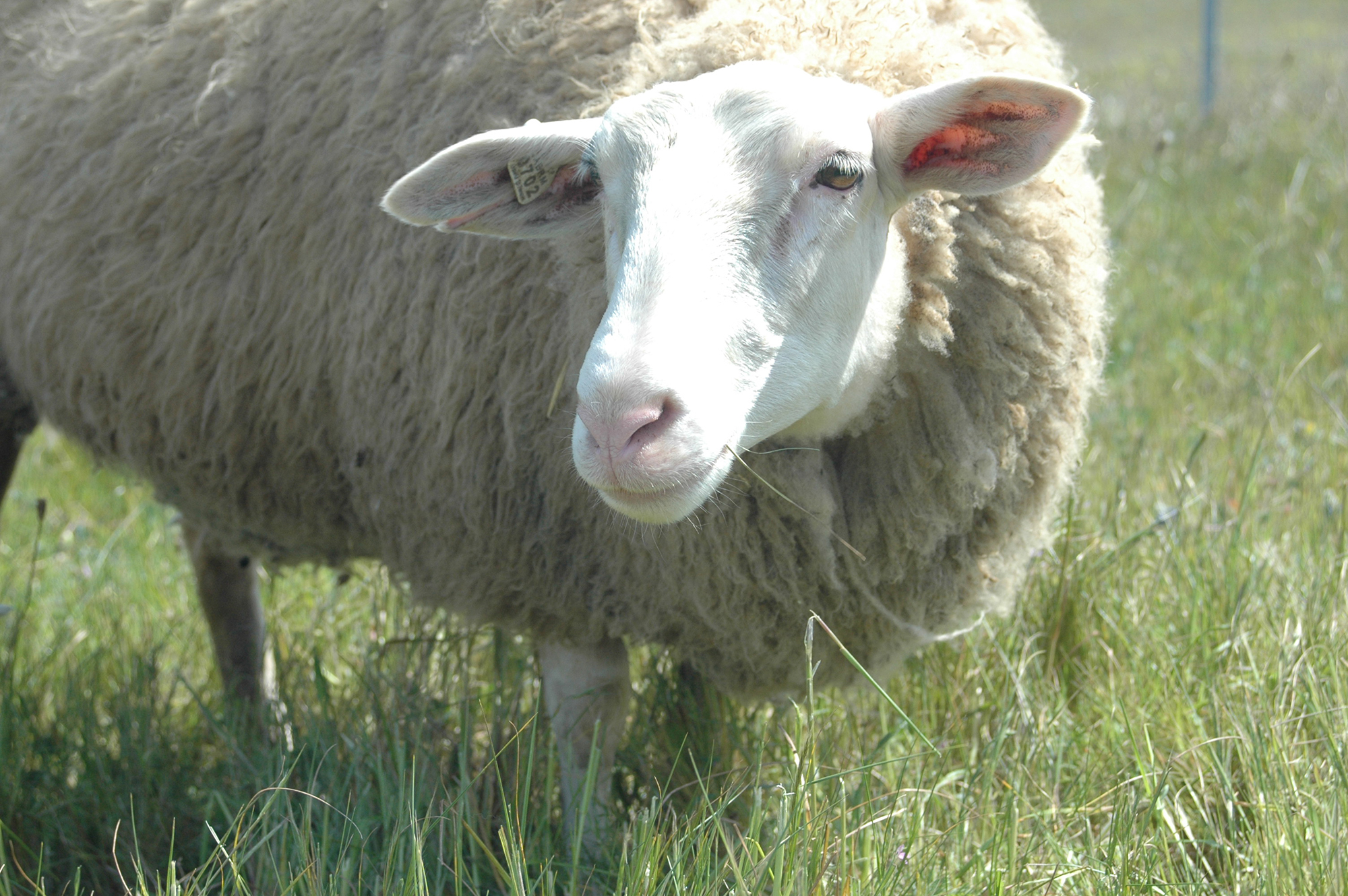
For 10 years we raised East Friesian sheep, a dairy breed that originated in Northern Europe. They are large and beautiful sheep, known for their prodigious milk production, with lovely, sleek, wool-less faces, and skinny rat-like tails. Because their tails stay clean on their own, we never docked their tails. An East Friesian in full fleece has an adorable comical look of a big ball of wool with skinny, toothpick legs. The East Friesians also have wonderful, pet-like personalities that make them great pets and excellent sheep for small back-yard flocks for families who want the milk.
East Friesians are not a very hardy breed. They require lots of high-protein feed to maintain their health, the ewes tend to have triplets or quads, which takes a toll on them and on the shepherds during lambing season, and the lambs are prone to pneumonia. To increase the hardiness of our East Friesians, we bred in a bit of Katahdin genetics. Katahdin sheep are descended from African hair sheep. We found that a bit of Katahdin blood in the East Friesians made them more hardy and healthy, and even enhanced milk production. Nevertheless, our dairy sheep needed a lot of love and TLC to thrive.
Our dairy ewes performed well in the milking parlor, with many producing over 1000 pounds of milk in our 5 1/2-month milking season, after having first nursed their lambs for 5 to 6 weeks. During the years that we ran the dairy commercially (2009 to 2016), our practice was to meter their milk production once a month during the milking season and only save the daughters of our best producers. We selected as well for good mothering and good udder conformation. We closed the dairy in 2017, but we continued to breed a reduced flock of high-percentage East Friesians.
In 2018 we began to diversify our sheep operation to optimize for quality of wool, and also to bring in breeds that are hardier than the East Friesians and tend to have fewer lambs, to make lambing-season a bit easier for us. We settled on Romneys and Corriedales and brought in small pedigreed starter flocks of both breeds in the summer of 2018. Since then, we have introduced 2 Cormo rams and more recently, moorit (brown) Romneys. See our fiber sheep page for more on our fiber sheep. In 2018 and 2019 we bred Corriedale and Romney rams to our East Friesian ewes and in 2019 and 2020 we had a nice crop of crossbred lambs that we jokingly refer to as “Friedales” (Corriedale x East Friesian) and “Romnesians” (Romney x East Friesian). Some of these crosses produced fleeces of high quality, and all of them produce lambs with good growth and quality. We are concentrating on the finer fiber sheep in our breeding program these days, but we are keeping the best of our Romnesians and Friedales, for their fleeces, lambs and sweet personalities.
To protect our sheep from predators, we use livestock-protection dogs. Our dogs were born with sheep and raised with sheep, and prefer the company of their sheep to that of people. They live with the sheep full-time and are very professional, always on guard and ready to fiercely defend their charges. Having been bred and selected for countless generations for their sheep-protecting behavior, these dogs need no training whatsoever to do their jobs. I consider them to be partners in our operation, because while we don’t have to tell them what to do, they are intelligent dogs who carefully observe our operation and do what we need them to do on cue. If we open a gate and start rounding up the lambs, the dog knows we are going to the corrals for lamb-weighing, and he leads the way. If there is one lamb separated from the group, or otherwise particularly vulnerable, the dog with the lambs will keep careful watch over that lamb, while still remaining vigilant about the rest of the flock. We have had a number of noble Great Pyrenees who gave every moment of their lives to their sheep until they succumbed to old age. We miss Big Otis, Oso, Shep and Orbit very much. But we are lucky to have two young and awesome dogs, Oakley and Oliver, protecting our sheep these days. Our best dogs come from an excellent breeder who breeds for strong working-dog traits and gives her dogs almost no human attention. Oakley and Oliver arrived at 6-months old and impressed us immediately with their maturity, their calmness around the sheep and the protective instinct they were already showing even as pups.
Thanks to our amazing dogs, we have never lost a lamb to a predator, although we have a resident mountain lion on the ranch and packs of coyotes who we hear howling every night.